


The scalp is often described as the 'soil' from which healthy hair grows, yet it remains one of the most overlooked areas of skin in daily grooming routines. Have you ever noticed flakes on dark clothing, persistent itching, or uncomfortable tightness after washing your hair? The scalp is skin – and like the skin on the face and body, it requires regular attention, appropriate products, and a balanced environment to function optimally.
Scalp concerns are extremely common, affecting individuals of all ages, hair types, and ethnicities. Dandruff, dryness, oiliness, and sensitivity are not signs of poor hygiene; they are typically signs of an imbalanced scalp ecosystem. This guide provides a clear, evidence-informed overview of common scalp conditions, their underlying causes, and practical, actionable steps to restore and maintain a healthy scalp.
Why Scalp Health Matters: More Than Just a Foundation for Hair
The Scalp as Skin – Unique Features and Functions
The scalp is an extension of the facial and body skin, but it possesses several unique characteristics. It has a higher density of hair follicles and sebaceous (oil-producing) glands than almost any other area of the body. This abundance of glands means the scalp produces significant amounts of sebum, which can be both protective (maintaining moisture and antimicrobial defence) and problematic (feeding yeast that causes dandruff). Additionally, the thick layer of hair creates a warm, humid microenvironment that can promote microbial growth – including yeast and bacteria – if not properly managed.
The scalp's skin barrier functions similarly to skin elsewhere: retaining moisture, protecting against irritants and pathogens, and shedding dead skin cells in a controlled, invisible manner. When any of these functions are disrupted, symptoms such as flaking, itching, redness, or soreness emerge.
The Link Between Scalp Health and Hair Quality
Healthy hair growth begins at the follicle, which resides within the scalp. Scientific reviews demonstrate that chronic scalp inflammation from conditions such as seborrheic dermatitis (dandruff) or psoriasis can disrupt the hair growth cycle, potentially leading to increased shedding or reduced growth rate. While a healthy scalp does not guarantee rapid hair growth, an unhealthy scalp can certainly impede it. Visible flakes, persistent itching, or soreness are signs that the scalp environment is compromised and requires attention. Addressing scalp health is therefore not merely cosmetic; it is foundational to maintaining a healthy head of hair.
Common Signs Your Scalp Needs Attention
Several observable and sensory indicators suggest that your scalp requires intervention:
- Visible flakes on the scalp, shoulders, or hairbrush – ranging from fine, white, dry flakes (dry scalp) to larger, yellowish, greasy flakes (dandruff).
- Persistent itching that worsens after washing or during periods of stress.
- Redness or irritation localised to specific patches or generalised across the scalp.
- Tightness or discomfort after shampooing, suggesting a compromised moisture barrier.
- Excess oiliness that reappears within hours of washing.
- Soreness or tenderness when brushing or touching the scalp.
These symptoms are common, manageable, and rarely indicate serious underlying disease.
Common Scalp Conditions and Their Underlying Causes
Dandruff (Seborrhoeic Dermatitis) – When Yeast Overgrows
Dandruff is the most common scalp condition, affecting approximately 50% of adults at some point. The primary cause is an overgrowth of a yeast called Malassezia, which naturally resides on most human scalps. In susceptible individuals, the yeast metabolises sebum (scalp oil) into by-products that irritate the skin, triggering inflammation and accelerated skin cell turnover. This rapid shedding produces visible clumps of cells – flakes. Typical dandruff flakes are yellowish, greasy, and larger than dry-scalp flakes. Dandruff often flares in response to stress, hormonal changes, cold weather, infrequent washing, or the use of certain hair products.
Dry Scalp – Moisture Barrier Disruption
Dry scalp is fundamentally a hydration issue, not a microbial one. Causes include cold, dry air (particularly in winter), central heating, over-washing with harsh shampoos, and the use of alcohol-heavy hair products. Unlike dandruff, dry scalp flakes are fine, white, and dry (not greasy), and there is typically no significant redness or inflammation. Dry scalp is often accompanied by dry skin elsewhere on the body, such as the arms, legs, or face. Restoring the moisture barrier through gentler cleansing and appropriate hydrating products is the primary treatment approach.
Oily Scalp – Sebum Overproduction and Its Consequences
An oily scalp results from overactive sebaceous glands producing excess sebum. Contributing factors include genetics, hormonal fluctuations (puberty, menstrual cycle, pregnancy), stress, and certain medications. Excess oil creates a favourable environment for Malassezia yeast, meaning oily scalp is often a precursor to dandruff. Paradoxically, harsh, stripping shampoos can worsen oiliness by triggering compensatory sebum production – a phenomenon known as the 'rebound effect'. Appropriate management involves gentle, balancing cleansers, appropriate washing frequency (often daily for very oily scalps), and avoidance of heavy, occlusive styling products.
Sensitive Scalp – Irritation Without Obvious Flakes
Sensitive scalp is defined as a condition characterised by stinging, burning, or itching in response to products or environmental factors, without necessarily visible flakes or redness. It can be a primary condition (genetically predisposed to reactivity) or secondary to barrier damage from over-washing, harsh ingredients, or chemical treatments such as colour, perms, or relaxers. Common triggers include fragrances and essential oils, preservatives, or harsh surfactants such as sodium lauryl sulphate (SLS).
Sensitive scalp often overlaps with sensitive skin on the face and body. Management focuses on identifying and avoiding triggers, using soothing and preservative-minimal formulations, and supporting barrier repair.
Other Scalp Conditions – When to Suspect More Than Dandruff
While dandruff, dryness, oiliness, and sensitivity account for the majority of scalp concerns, other conditions can affect the scalp and may require medical diagnosis. Scalp psoriasis. presents as thick, silvery-white, well-defined plaques with significant scaling, often associated with psoriasis elsewhere on the body. Folliculitis appears as inflamed hair follicles – small red bumps or pustules – caused by bacterial or fungal infection. If symptoms are severe, persistent despite home care, or associated with hair loss, a GP or dermatologist should be consulted for accurate diagnosis.
A Step-by-Step Scalp Care Routine for Everyday Health
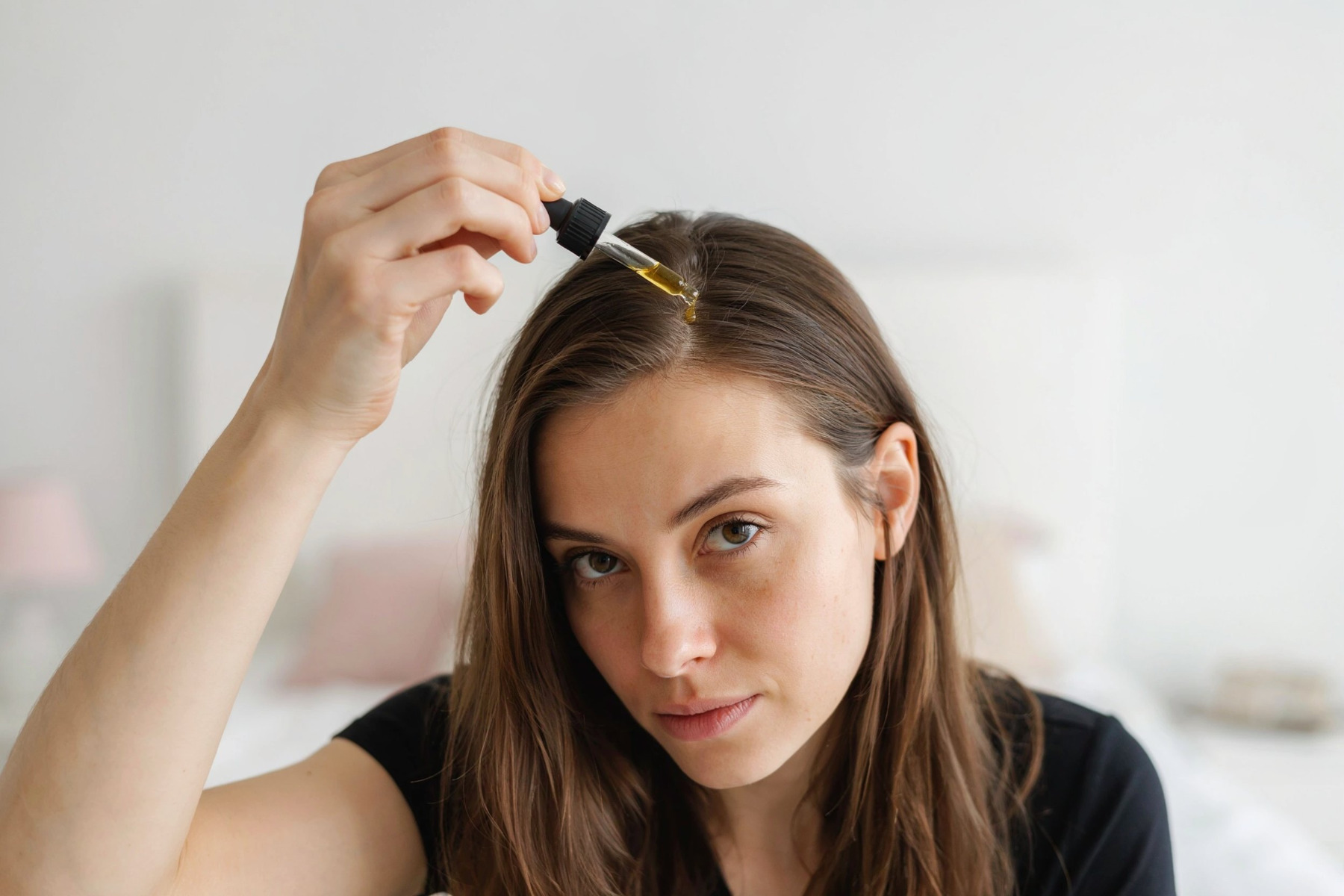

Step One – Gentle, Appropriate Cleansing
Washing frequency should be individualised; there is no universal 'correct' number of washes per week. Guidance based on scalp type is more useful:
- Oily scalp: Daily or every other day washing with a gentle, balancing shampoo.
- Dry scalp: Two to three times weekly with a moisturising, sulphate-free shampoo.
- Dandruff-prone scalp: Two to four times weekly with an antifungal shampoo, alternating with a gentle shampoo.
Technique matters as much as product choice. Focus shampoo on the scalp, not the lengths of hair. Massage gently with fingertips – never fingernails, which can cause micro-abrasions. Rinse thoroughly to remove all product residue, and use lukewarm rather than hot water, as hot water strips natural oils.
Step Two – Targeted Treatment for Specific Concerns
Treatment should be layered according to your primary scalp condition:
- For dandruff: Use a shampoo containing zinc-based ingredients, selenium sulphide, or piroctone olamine. Leave on the scalp for three to five minutes before rinsing. Use twice weekly for four weeks, then once weekly for maintenance.
- For dry scalp: Use a moisturising, sulphate-free shampoo followed by a lightweight, water-based scalp serum containing hyaluronic acid, glycerin, or aloe vera. Avoid heavy oils if prone to buildup.
- For oily scalp: Use a clarifying or balancing shampoo containing salicylic acid or niacinamide. Avoid 'moisturising' or 'repair' formulas designed for dry hair.
- For sensitive scalp: Use a fragrance-free, preservative-minimal, sulphate-free shampoo. Apply a calming serum containing niacinamide or centella asiatica.
Step Three – Scalp Exfoliation (Chemical Over Physical)
Exfoliation removes dead skin cell buildup, allowing treatments to penetrate more effectively. However, physical exfoliation – scrubs with granules such as sugar, salt, or walnut shell – can cause micro-tears and worsen irritation. These are not recommended for most scalps. Chemical exfoliation is both gentler and more effective. Products containing salicylic acid (a beta-hydroxy acid), glycolic acid, or lactic acid (alpha-hydroxy acids) dissolve intercellular glue without abrasion.
For oily or dandruff-prone scalps, use a salicylic acid scalp serum or pre-shampoo treatment once weekly. Those with dry or sensitive scalps should exfoliate only once every two weeks, using a gentle polyhydroxy acid (PHA) or low-concentration lactic acid (5% or less).
Step Four – Conditioning With Scalp Health in Mind
Traditional conditioners are designed for hair lengths, not the scalp. Apply conditioner from mid-lengths to ends only, avoiding the scalp unless you are using a specifically formulated 'scalp conditioner' or leave-in serum. Heavy conditioners, oils, and butters applied to the scalp can occlude follicles, trap sebum, and exacerbate dandruff or oiliness. For those with dry scalps, a lightweight, water-based scalp serum is preferable to traditional conditioner on the roots.
Step Five – Post-Wash Drying and Scalp Environment
Going to bed with wet hair creates a warm, humid environment that promotes microbial overgrowth. Gently towel-dry (never rubbing vigorously), then allow hair to air-dry fully or use a hairdryer on a low heat setting. For those prone to dandruff or fungal issues, drying the scalp promptly after washing or sweating is particularly important. Tight hairstyles – ponytails, braids, weaves – can trap moisture and create friction, contributing to irritation and folliculitis. Allow the scalp to 'breathe' by varying hairstyles and avoiding constant tension.
Lifestyle Factors That Support Scalp Wellness
Diet, Hydration and Scalp Health
Nutritional status affects skin health everywhere, including the scalp. Deficiencies in zinc, B vitamins (particularly biotin and B6), and essential fatty acids have been associated with poor scalp health. A balanced diet rich in colourful vegetables, lean proteins, healthy fats (omega-3s from oily fish, flaxseed, walnuts), and adequate hydration supports the skin's ability to repair and regulate inflammation. While no specific food cures dandruff or dryness, overall dietary quality is a meaningful contributor to scalp wellness.
Stress Management and Its Impact on Scalp Conditions
Stress is a well-established trigger for seborrhoeic dermatitis (dandruff) and psoriasis flares. The mechanism involves increased cortisol and inflammatory cytokines, which disrupt the skin barrier and alter sebum composition, creating a more favourable environment for Malassezia yeast. Incorporating stress management techniques – mindfulness, regular exercise, adequate sleep, therapy if needed – is a valuable component of a comprehensive scalp care strategy.
Environmental Factors – Weather, Water Quality and Hair Practices
Cold, dry winter weather worsens dry scalp, while hot, humid weather can increase oiliness and dandruff. Hard water (high in calcium and magnesium) leaves mineral deposits on the scalp, contributing to irritation and dryness; a showerhead filter can help. Protective practices include wearing a hat in extreme weather, avoiding excessive heat styling on the scalp, and using a silk or satin pillowcase to reduce friction and moisture loss overnight.
When to See a Professional – Recognising Red Flags
Home care is effective for the majority of scalp concerns, but certain indicators suggest that professional input is needed. Seek a GP or dermatologist if you experience:
- Persistent symptoms despite eight weeks of consistent, appropriate home treatment.
- Severe itching or pain that disrupts sleep or daily function.
- Visible hair loss or thinning in association with scalp symptoms.
- Thick, silvery-white plaques (possible psoriasis) or pustules (possible folliculitis).
- Signs of infection: weeping, crusting, swelling, or spreading redness.
- Symptoms that began after starting a new medication (possible drug reaction).
Accurate diagnosis is the first step toward lasting relief, and prescription treatments – such as stronger antifungal shampoos, topical steroids, or medicated lotions – may be appropriate.
Conclusion
Maintaining a healthy scalp is not simply about addressing visible concerns such as flakes, oiliness, or itching—it is about supporting the overall health of the skin environment from which your hair grows. Understanding the difference between common scalp conditions allows you to choose targeted solutions rather than relying on trial and error. Consistent cleansing, appropriate treatments, gentle scalp care practices, and supportive lifestyle habits can make a significant difference in restoring balance and comfort. By taking a proactive, informed approach to scalp care, you can create the optimal foundation for healthier skin, improved comfort, and stronger-looking hair. Start implementing these simple scalp-health strategies today and give your scalp the attention it deserves.