


Can you rebuild collagen naturally? It's one of the most common skincare questions, and one of the most oversold. Collagen is the protein that keeps skin firm and plump, and shop shelves are full of serums promising to restore it. The honest answer is more nuanced: some ingredients may help support collagen and protect what you already have, but none will rebuild it dramatically.
This guide covers following groups of ingredients: Peptides (copper peptides and Matrixyl), Polyphenols (EGCG & resveratrol), and Growth Factors. We explain what the research does and doesn't show, then look at what to use in your 30s, 40s and 50s, and what "naturally" really means. Retinoids and vitamin C have the strongest evidence and remain the foundation, so think of these ingredients as supporting players.
Why Skin Loses Collagen With Age
How Collagen Declines From Your 20s Onwards
Collagen makes up the bulk of the dermis, the layer beneath the surface that gives skin its strength and bounce. From your mid-20s, production slows and existing fibres become fragmented and less organised. That's why fine lines, sagging and thinner skin appear gradually rather than overnight. The decline isn't always steady, though. Research suggests collagen loss accelerates in the years after menopause, when falling oestrogen levels affect skin thickness and firmness. This is why many women notice a sudden change in their late 40s and 50s.
What Speeds Up Collagen Breakdown: UV, Pollution and Lifestyle
Ageing is only part of the picture. Ultraviolet radiation is the biggest external factor, triggering enzymes that break collagen down, and it's commonly estimated to account for most visible facial ageing. That applies in the UK too. UVA, the ageing wavelength, passes through cloud and window glass, so a grey day is no reason to skip sun protection.
Other culprits include smoking, high sugar intake (which drives glycation, where sugars bind to collagen and make it stiff and brittle), air pollution and chronic poor sleep. The upside is that these are factors you can influence, and protecting the collagen you have is far easier than replacing it.
What Ingredients Boost Collagen in Skin? A Quick Overview
Ingredients that may support collagen in skin include retinoids, vitamin C, peptides such as copper peptides and Matrixyl, polyphenols such as EGCG and resveratrol, and growth factors. Retinoids and vitamin C have the strongest evidence, while the others show promising but more limited results.
- Copper peptides (GHK-Cu): signal skin repair and collagen production. Evidence: small studies; promising but limited.
- Matrixyl (palmitoyl peptides): mimic collagen fragments to prompt new synthesis. Evidence: some clinical data, though much is manufacturer-funded.
- EGCG: an antioxidant that may limit collagen breakdown. Evidence: mostly lab-based, with limited topical data.
- Resveratrol: antioxidant protection against UV-related damage. Evidence: mostly lab-based, with stability issues.
- Growth factors: signal cells to repair and produce collagen. Evidence: limited independent research, with absorption questions.
It's also worth knowing what won't work. Topical collagen creams can't replace the collagen in your skin, because the molecules are too large to penetrate the surface. They can moisturise, but they don't add collagen to the dermis. The ingredients below are newer options that can sit alongside retinoids and vitamin C, not replace them.
Peptides for Skin: Do Copper Peptides and Matrixyl Increase Collagen?
What Are Skincare Peptides and How Do They Signal Collagen Production?
Peptides are short chains of amino acids, the building blocks of proteins. In skincare, the idea is that certain peptides act as messengers. When collagen breaks down, small fragments are released, and skin cells may read them as a sign that repair is needed, prompting fresh collagen production. Signal peptides, such as Matrixyl, aim to mimic this process. Carrier peptides, such as copper peptides, deliver trace elements that support enzymes involved in healing. Other types target expression lines and are a separate category.
Copper Peptides (GHK-Cu): Benefits, Evidence and Who Should Use Them
GHK-Cu is a naturally occurring copper-binding peptide found in human plasma, and levels fall with age. Laboratory studies suggest it can stimulate collagen synthesis and support wound healing, and small clinical studies have reported improvements in skin density, firmness and fine lines. However, these trials are often small, short and sometimes industry-funded, so the results are encouraging rather than conclusive.
Copper peptides suit people seeking a gentle anti-ageing option, though anyone with a known copper sensitivity should avoid them. Formulation matters too. Some brands advise against layering copper peptides with strong acids or L-ascorbic acid, as low pH and oxidation may reduce effectiveness. Follow the manufacturer's guidance, or use them at different times of day.
Matrixyl (Palmitoyl Pentapeptide): What the Research Says
Matrixyl was one of the first signal peptides used in anti-ageing products. The original ingredient, palmitoyl pentapeptide-4, is based on a fragment of type I collagen, with a fatty acid attached to help it cross the skin's outer layer. Later versions include Matrixyl 3000, a blend of two peptides, and Matrixyl Synthe'6. Studies report reductions in wrinkle depth over several months, but much of the research was carried out or funded by manufacturers, and independent trials are scarce. That doesn't mean it doesn't work, only that claims deserve reasonable caution.
How to Use Peptide Serums in a Skincare Routine
Apply peptide serums to clean skin, after any water-based toner and before moisturiser, morning or evening. Be consistent and patient: visible changes typically take eight to twelve weeks, and they're usually subtle. In the morning, finish with a broad-spectrum SPF 30 or higher, since peptides can't offset ongoing UV damage. Peptides are generally well tolerated, which makes them a good choice for sensitive skin or for anyone who finds retinol irritating, especially in the colder months when central heating and wind can compromise the skin barrier.
Polyphenols for Skin: EGCG and Resveratrol Explained
Polyphenols are plant compounds with strong antioxidant properties. Rather than directly building collagen, they're best understood as protectors, helping to reduce the oxidative stress that drives collagen breakdown.
EGCG (Green Tea Extract): Antioxidant Protection and Collagen Support
Epigallocatechin gallate, or EGCG, is the main active polyphenol in green tea. Lab studies suggest it can neutralise free radicals and inhibit matrix metalloproteinases, the enzymes that degrade collagen after UV exposure. Small studies of topical green tea have shown some protection against sun damage, but the evidence is limited, and EGCG is unstable, breaking down when exposed to light and air. Drinking green tea adds polyphenols too, but concentrated green tea extract supplements have been linked to liver problems at high doses, so tea and topical products are the safer routes.
Resveratrol From Grapes: Can It Help Protect Skin Collagen?
Resveratrol is found in grape skins, red wine, berries and peanuts. It's a potent antioxidant in the lab, and some studies suggest it may reduce UV-related damage and inflammation in skin cells. The difficulty is delivery. Resveratrol degrades easily in light and oxygen, and it's unclear how much reaches the deeper layers where collagen sits. Human evidence for topical use is limited, and claims about it "switching on" longevity genes come largely from lab and animal research. Treat it as a useful antioxidant, not a collagen rebuilder.
How to Choose Polyphenol Skincare That Actually Works
Look for stable formulations in opaque, airless pump or tube packaging that limits exposure to light and air, and avoid clear jars you dip your fingers into. Check that the polyphenol appears reasonably high in the ingredient list, and be sceptical of products that name it only in the marketing. These ingredients work best as a protective layer in your morning routine, under sunscreen, where they may help neutralise free radicals that get past it. They complement SPF but never replace it.
Growth Factors in Skincare: Can Topical Serums Really Stimulate Collagen?

What Are Skin Growth Factors and Where Do They Come From?
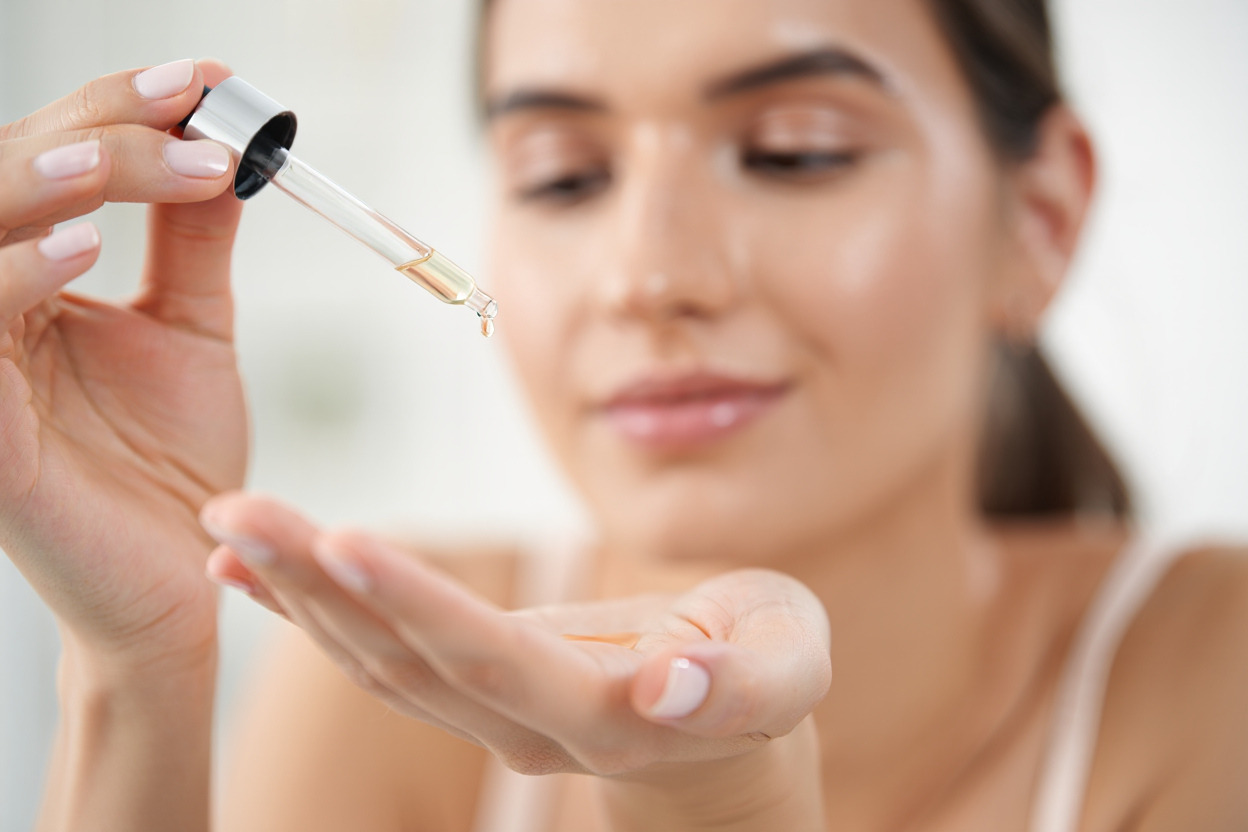
Growth factors are signalling proteins that tell skin cells to divide, repair and produce collagen. Our bodies make them naturally, but production falls with age. In skincare they come from several sources:
- Human-derived: for example, conditioned media from cultured skin cells.
- Recombinant: produced by bacteria or yeast using biotechnology.
- Plant-derived: usually plant extracts marketed as "growth factor-like" rather than true human growth factors.
Source matters, as it affects both cost and how closely the ingredient resembles the real thing.
The Evidence and the Controversy: Molecule Size, Absorption and Safety Questions
Growth factors are large protein molecules, well above the size generally thought to penetrate intact skin easily, so critics question how much reaches living cells. Some small studies of human-derived serums report improvements in fine lines and texture, but independent research is limited and follow-up periods are short. There are also theoretical safety questions, since growth factors stimulate cell proliferation and long-term data on regular topical use is lacking. There's no clear evidence of harm from cosmetic use, but caution is reasonable, and dramatic before-and-after claims should be viewed sceptically.
Who Might Consider Growth Factor Serums (and Who Should Be Cautious)
Growth factor serums are usually expensive and best suited to adults with mature skin who already have a solid routine of SPF plus a retinoid or vitamin C. Patch test first, and introduce the product on its own for a couple of weeks. If you're pregnant or breastfeeding, have a skin condition such as rosacea or eczema, or have a history of skin cancer, speak to a dermatologist or GP before trying one.
What to Use for Collagen in Your 30s, 40s and 50s
There's no single right routine, but a decade-by-decade approach helps you prioritise. In every decade, daily SPF is the foundation, and retinoids and vitamin C are the most evidence-backed additions (retinoids aren't suitable in pregnancy).
Collagen-Boosting Skincare in Your 30s: Prevention and Early Support
In your 30s, the goal is prevention. Collagen loss is still gradual, so gentle, consistent habits matter more than strong treatments.
- Morning: antioxidant serum (vitamin C, or an EGCG or resveratrol formula), moisturiser, SPF 30 or higher.
- Evening: cleanse, then a starter peptide serum and moisturiser.
Collagen-Boosting Skincare in Your 40s: Adding Peptides and Targeted Actives
In your 40s, fine lines and reduced firmness become more noticeable, and perimenopause can begin to affect skin. This is a sensible time to add targeted actives, introducing one product at a time and giving each at least three months before judging results.
- Morning: antioxidant serum, moisturiser, SPF.
- Evening: copper peptide or Matrixyl-based serum, plus a retinoid on alternate nights if you tolerate one.
Collagen-Boosting Skincare in Your 50s and Beyond: Supporting Skin Through Menopause
After menopause, skin tends to become thinner, drier and less elastic as oestrogen falls. Richer textures, ceramide-based moisturisers and barrier support become more important.
- Morning: antioxidant serum, rich moisturiser, SPF.
- Evening: peptide or growth factor serum if your budget allows, then a nourishing cream.
HRT can affect skin as well as other menopausal symptoms, but it's a medical decision, so speak to your GP about the benefits and risks.
Can You Rebuild Collagen Naturally Beyond Skincare?
You can support collagen naturally, but not dramatically rebuild it. Daily sun protection, not smoking, a balanced diet and good sleep help protect and maintain the collagen you have, while skincare ingredients may add modest support. No lifestyle change or natural remedy restores youthful collagen levels.
Your body needs protein for the amino acids that make up collagen, and vitamin C is essential for synthesising it, so eat citrus fruit, peppers and berries. Polyphenol-rich foods such as green tea, berries and grapes add antioxidant support.
Collagen supplements are heavily marketed, but the evidence is mixed. Some studies show modest benefits for skin hydration and elasticity, though many are industry-funded, so they deserve an article of their own. In clinics, treatments such as microneedling and laser can stimulate collagen more strongly than creams. If you consider them, choose a qualified, regulated practitioner.
Conclusion: What Really Helps Rebuild Collagen
The truth about rebuilding collagen naturally is less dramatic than the marketing suggests - but it's also far more empowering. While no serum or supplement can turn back the clock entirely, the science is clear on what genuinely matters: daily broad-spectrum SPF, a retinoid or vitamin C as your foundation, and targeted support from peptides, polyphenols and growth factors where your budget and skin tolerate them. Protect what you have, nourish it from the inside with protein, vitamin C and antioxidant-rich foods, and be patient - visible changes take weeks, not days. The goal isn't to rebuild youthful collagen overnight; it's to support your skin steadily through every decade, so it stays as firm, resilient and healthy as it can be.
Ready to build a routine that actually works for your skin? Start with the basics this week - sunscreen every morning, one evidence-backed active at night - and add the rest only when you're consistent.
This article is for information only and isn't medical advice. Speak to a pharmacist, GP or dermatologist about any skin concerns.