


Few skin concerns are as universally frustrating as the blackhead. They are not inflamed or painful like cystic acne, yet their persistent presence across the nose, chin, and forehead can feel impossible to shift. Squeezing is rarely the answer, and many over-the-counter products promise results they cannot deliver.
The reason so many blackhead treatments fail is straightforward: skin type is rarely considered. A technique or ingredient that works beautifully for oily skin may cause irritation, dryness, or even more congestion on sensitive or dry complexions. This guide provides a professional, evidence-informed framework for treating blackheads according to your specific skin type. You will learn how to unclog pores naturally, which ingredients to prioritise, and how to build a sustainable skincare routine for clearer, healthier, more confident skin.
Understanding Blackheads: What They Are and Why They Form
Before selecting treatments, it is essential to understand the biology of a blackhead. Misinformation is common, and incorrect assumptions often lead to ineffective or damaging practices.
The Biology of a Clogged Pore
Blackheads, medically termed open comedones, form when a hair follicle becomes blocked with a combination of three elements:
- Sebum: The skin's natural oil, produced by sebaceous glands.
- Dead skin cells: Corneocytes that have been shed from the stratum corneum (the outermost skin layer) but fail to clear from the follicular opening.
- Cutibacterium acnes bacteria: Naturally present on the skin, but can proliferate within the blocked follicle.
When this mixture oxidises upon exposure to air, it turns dark or black. This discolouration is not dirt, contrary to popular belief. Attempting to scrub away blackheads with harsh abrasives or pore strips addresses the surface colouration without resolving the underlying blockage.
Blackheads Versus Other Pore Concerns
Distinguishing blackheads from similar-looking conditions is important for treatment selection:
- Blackheads (open comedones): Dark, flat or slightly raised, with a visible central opening.
- Whiteheads (closed comedones): Similar blockage but covered by a thin layer of skin, appearing as small, flesh-coloured bumps.
- Sebaceous filaments: Natural, cylindrical collections of sebum within pores. They appear greyish or yellow when expressed and are not a form of acne. Complete elimination is neither possible nor desirable.
The following protocols are designed specifically for true blackheads. Sebaceous filaments require different management strategies, primarily involving gentle regulation of sebum production rather than aggressive extraction.
Identifying Your Skin Type Accurately
Treatment effectiveness depends entirely on matching interventions to your skin's characteristics. Applying a protocol designed for oily skin to a dry or sensitive complexion will worsen the very issues you aim to resolve.
The Wash-and-Wait Method
Perform this simple diagnostic test before purchasing any new products: first, cleanse your face with a gentle, non-stripping cleanser, then pat dry and leave the skin completely product-free. Wait 60 minutes, then observe how your skin feels and appears:
- Oily skin: Shine visible across the entire face, particularly the T-zone (forehead, nose, chin). Feels greasy to the touch.
- Dry skin: Tightness, possible flaking or rough patches. Little to no visible shine.
- Sensitive skin: Redness, itching, stinging, or warmth. May also be oily or dry concurrently.
- Combination skin: Shine in the T-zone, with normal or dry cheeks and jawline.
Treating Blackheads on Oily Skin
Oily skin produces excess sebum, providing abundant material for blackhead formation. However, this skin type also tolerates active ingredients well and responds rapidly to proper treatment.
Key Ingredients and Their Mechanisms
Oily skin benefits most from ingredients that regulate sebum production and promote cellular turnover:
- Salicylic acid for blackheads: This beta hydroxy acid (BHA) is lipophilic, meaning it dissolves in oil. It penetrates deep into the follicle, breaking down the mixture of sebum and dead skin cells that forms blackheads. A concentration of 0.5% to 2% is appropriate for home use.
- Niacinamide for pores: Vitamin B3 reduces sebum production over time and improves pore appearance. A clinical study demonstrated that 4% to 5% serum used twice daily yields measurable results within eight to twelve weeks.
- Retinoids (over-the-counter): Adapalene or retinol increases cell turnover, preventing dead skin cells from accumulating within follicles.
Recommended Routine for Oily Skin
- Morning: Begin with a gentle, foaming cleanser containing salicylic acid (maximum 2%), followed by a niacinamide serum. Apply an oil-free, non-comedogenic moisturiser, and finish with a broad-spectrum SPF 30 or higher.
- Evening: Perform a double cleanse, using an oil-based cleanser followed by a water-based cleanser. Apply a salicylic acid toner or leave-on exfoliant, starting with every other night and increasing to nightly as tolerated. On alternate nights, if using salicylic acid the same evening may cause irritation, apply a retinoid instead. Finish with a lightweight, gel-based moisturiser.
Frequency of exfoliation for blackheads on oily skin: Chemical exfoliation with BHA can be performed nightly once tolerance is established. Physical exfoliation (gentle scrubs) should be limited to once weekly and performed with light pressure.
Treating Blackheads on Dry Skin
Dry skin presents a different challenge. It produces less sebum, so blackheads are typically fewer and concentrated in the T-zone. The primary risk is overtreatment, which compromises the already fragile skin barrier.
Balancing Exfoliation With Hydration
Dry skin requires blackhead treatment that prioritises barrier preservation. Harsh astringents, alcohol-based toners, and high-concentration exfoliants are contraindicated. Instead, look for the following:
- Lower concentration salicylic acid: 0.5% to 1% maximum. Use only two to three times per week, not daily.
- Lactic acid: An alpha hydroxy acid (AHA) that exfoliates while providing humectant properties. Lactic acid draws moisture into the skin, counteracting the drying effects of exfoliation.
- Polyhydroxy acids (PHAs): Larger molecular size means slower, gentler penetration. Gluconolactone and lactobionic acid exfoliate without the stinging or irritation common with other acids.
Recommended Routine for Dry Skin
- Morning: Begin with a cream or milk cleanser (non-foaming), followed by a hydrating toner or essence. Apply a hyaluronic acid serum, then a rich, barrier-supporting moisturiser. Finish with an SPF 30 or higher; physical sunscreens containing zinc oxide or titanium dioxide are often better tolerated.
- Evening: Use a gentle cream cleanser, then apply a lactic acid or PHA exfoliant (two to three times weekly only). Follow with a niacinamide serum, which is tolerated well by dry skin and helps regulate remaining blackheads. Finish with a thicker night cream or facial oil, choosing non-comedogenic options such as squalane or jojoba.
How to treat blackheads without drying out skin on dry skin types: Apply exfoliants for a shorter duration ("short contact therapy" – leaving on for 10–15 minutes then rinsing) or buffer them by applying moisturiser first.
Treating Blackheads on Sensitive Skin
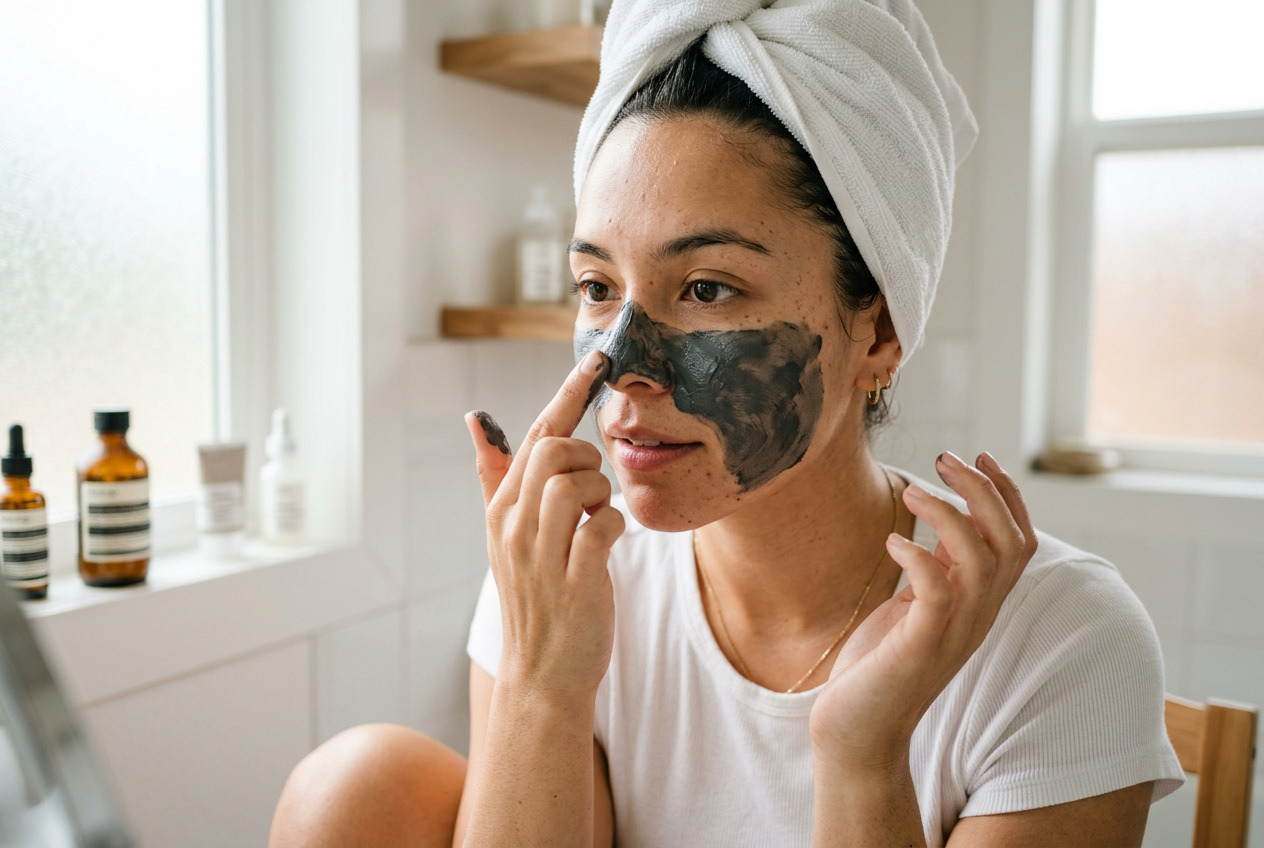

Sensitive skin requires the most cautious approach. Inflammation, redness, and barrier disruption can occur rapidly, and even well-tolerated ingredients may provoke reactions.
Identifying Irritating and Non-Irritating Options
Sensitive skin often reacts adversely to fragrances and essential oils, alcohol (denatured alcohol, SD alcohol), high concentrations of any active ingredient, physical exfoliants such as scrubs, brushes, and pore strips, and frequent product application or the "layering" of multiple active ingredients. Safer alternatives for blackhead treatment on sensitive skin include:
- Azelaic acid: An under-recognised ingredient that clears pores, reduces inflammation, and is generally well-tolerated even on reactive skin. Available in 10% serums or 15% gel (prescription only in some formulations).
- PHA exfoliants: As noted above, PHAs are significantly gentler than BHAs or AHAs.
- Niacinamide for pores: Start with a low concentration (2–4%) and apply only every other day initially.
- Salicylic acid in rinse-off formats: A cleanser containing 0.5% salicylic acid, used for 60 seconds then rinsed, provides exfoliation with less prolonged contact than a leave-on product.
Recommended Routine for Sensitive Skin
- Morning: Start with a lukewarm water rinse or an ultra-gentle cleanser, then apply a niacinamide serum every other day to begin with. Follow with a minimal-ingredient moisturiser containing ceramides, squalane, or shea butter, and finish with a mineral SPF 30 or higher.
- Evening: Use a gentle cleanser, then apply a PHA toner or azelaic acid serum (three times weekly maximum). Finish with a barrier repair moisturiser, looking for ingredients such as ceramides, cholesterol, and fatty acids.
Patch testing protocol: Apply any new product to a small area behind the ear or on the inner arm for five days before using on the face. Introduce only one new product every two weeks to identify causality if irritation occurs.
Treating Blackheads on Combination Skin
Combination skin requires what is sometimes called "multi-zone" treatment: exfoliating the oily T-zone without stripping the normal or dry cheeks.
Zone-Specific Product Application
The most effective approach for combination skin is not a single routine but a targeted one. Apply stronger treatments where needed and gentler formulations elsewhere.
- For the T-zone (forehead, nose, chin): Use a salicylic acid 1–2% cleanser or leave-on toner, followed by a niacinamide serum, which is beneficial for sebum regulation. Finish with a lightweight, oil-free moisturiser.
- For the cheeks and jawline: Use a gentle, non-foaming cleanser (or use the same cleanser but avoid leaving it on these areas for extended time), then apply a hydrating serum that is hyaluronic acid or glycerin-based. Finish with a richer moisturiser or cream.
Recommended Routine for Combination Skin
- Morning: Begin with a salicylic acid cleanser, concentrating on the T-zone and using it sparingly on the cheeks. Apply a niacinamide serum to the entire face, then use a light moisturiser on the T-zone followed by a richer moisturiser on the cheeks only. Finish with an SPF 30 or higher.
- Evening: Use a gentle cream cleanser, then apply salicylic acid to the T-zone only, three to four times weekly. Follow with a hydrating serum on the cheeks and jawline, then finish with a moisturiser matched to each zone as per the morning routine.
How to treat blackheads on combination skin without over-drying: Consider using two separate moisturisers or applying a single product in varying amounts – less on the T-zone, more on the cheeks.
Professional Blackhead Removal Options
Home treatment is the cornerstone of blackhead management, but certain situations warrant professional intervention. Deep, stubborn comedones that do not respond to topical ingredients may require extraction or advanced procedures.
When to See a Professional
- Blackheads persist after twelve weeks of consistent home treatment.
- You have attempted extraction at home and caused scarring or inflammation.
- Blackheads are accompanied by inflammatory acne (papules, pustules, or nodules).
- You have a history of post-inflammatory hyperpigmentation, which can be worsened by improper extraction.
Professional treatment options
- Manual extraction: Performed with sterile instruments and appropriate technique. Do not attempt this at home..
- Chemical peels: Superficial peels containing salicylic acid or a combination of AHAs and BHAs can clear multiple comedones in a single session.
- Hydrafacial: A medical-grade device that combines gentle suction with topical serums to clear pores without irritation.
Why Pore Strips Are Not Recommended
Adhesive pore strips physically pull contents from the follicle. While they provide immediate visible results, they also remove sebaceous filaments that should remain intact, stretch the follicular opening over time (making pores appear larger), cause micro-tears in the skin barrier, and do nothing to prevent future blackheads. Professional extraction, when performed correctly, avoids these complications.
Preventing Blackheads Long-Term
Treatment addresses existing blackheads. Prevention reduces the likelihood of recurrence. A maintenance routine is essential for sustained clear skin.
Non-Comedogenic Skincare Principles
The term "non-comedogenic" indicates that a product has been formulated to avoid clogging pores. However, individual responses vary. A product that is non-comedogenic for most people may still cause congestion for some.
Ingredients to favour in non-comedogenic skincare:
- Lightweight humectants (glycerin, hyaluronic acid, aloe vera).
- Gel or water-based moisturisers rather than heavy creams.
- Silicones (dimethicone, cyclopentasiloxane) – despite misconceptions, most silicones are non-comedogenic.
Ingredients some individuals find congesting
- Coconut oil (highly comedogenic for many).
- Isopropyl myristate and isopropyl palmitate (synthetic esters frequently implicated in comedonal acne).
- Algae or seaweed extracts.
Practical prevention strategies
- Cleanse twice daily, but no more. Over-cleansing stimulates compensatory sebum production.
- Change pillowcases weekly. Pillowcases accumulate sebum, dead skin cells, and bacteria.
- Avoid resting your phone against your cheek, or sanitise the screen regularly.
- Remove makeup and sunscreen thoroughly each evening. Double cleansing (oil cleanser followed by water-based cleanser) is particularly effective.
Conclusion: Tailored Treatment Delivers Confident Skin
Blackheads are manageable and are not a sign of poor hygiene, nor are they untreatable without professional intervention; the key difference between ongoing frustration and clear pores is matching treatment to skin type. Avoid the common pitfalls of pore strips, aggressive scrubbing, alcohol-based toners, and squeezing at home; instead, build a simple, consistent routine around evidence-supported ingredients at appropriate concentrations for your unique skin.
Now, take a moment to assess your own skin type and choose one change you can implement this week – your clearer, more confident complexion starts today.